
Remembering Dansih illustrator and painter Gerda Wegener, best known for her (lesbian) erotica
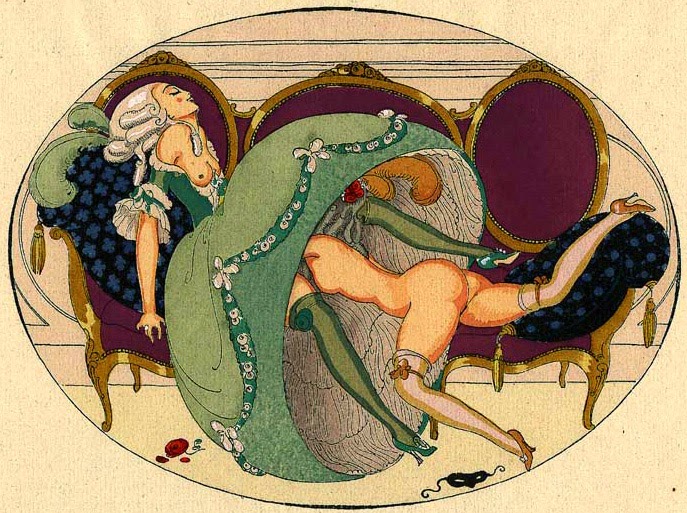
 March 15, 2014 /LGBT News/ Born 128 years ago, on 15 March 1886, Gerda Gottlieb Wegener Porta was a Danish illustrator and painter best known for her erotica.
Gerda moved to Copenhagen to pursue her education at the Royal Art Academy, and married fellow artist Einar Wegener (later Lili Elbe) in 1904. After moving to Paris in 1912, she found much success both as a painter and as illustrator for Vogue, La Vie Parisienne, Fantasio, and many other magazines. Her career relied on a phenomenal talent but perhaps even more so on her notorious diligence, and the advantages that her unusual marriage brought her.
Lili Elbe, who by many at the time was considered a more talented artist, toned down his own work and profile to help his wife in her artistic endeavors. Posing for Gerda in women’s clothes, Lili became Gerda’s favorite model, and eventually came out as a male-to-female transsexual woman. She had the first publicly known sex reassignment surgery in history in 1930. Her partner supported Elbe throughout her transition. The Wegeners’ marriage was declared null and void in October 1930 by Christian X, the King of Denmark at that time.
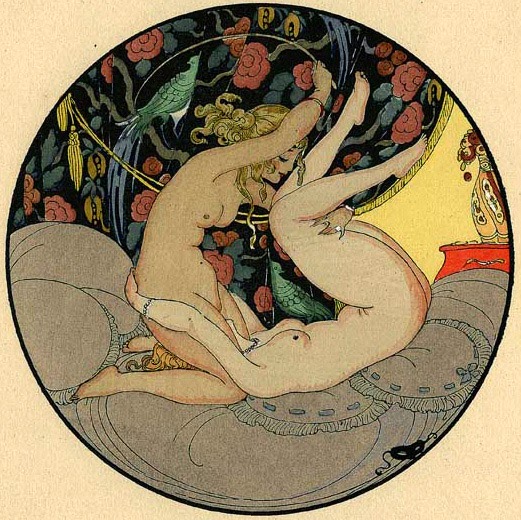
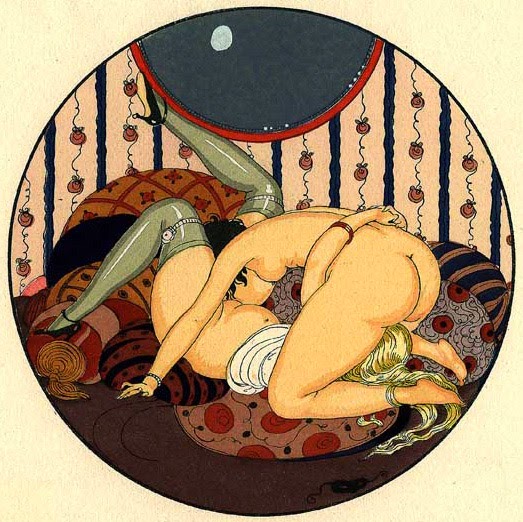
In 1931, Gerda Wegener married the Italian officer, aviator and diplomat Major Fernando Porta and moved with him to Morocco. She later divorced Porta in 1936 and returned to Denmark in 1938. She held her last exhibition in 1939, but by this time she was largely out of fashion. She died in July 1940.
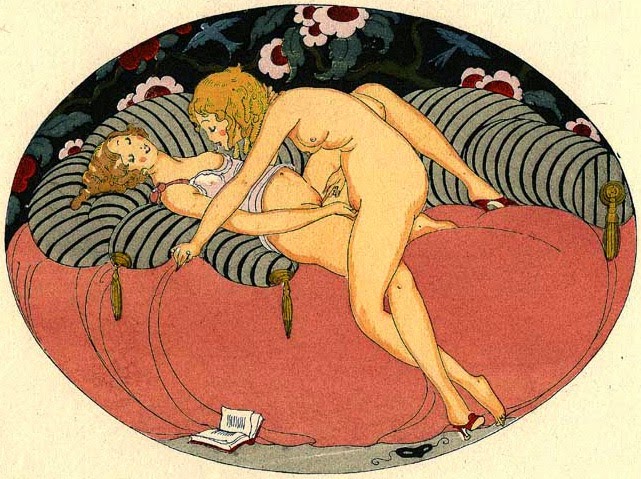

The Danish Girl, David Ebershoff’s 2001 novel about Einar/Lili and Gerda was an international bestseller and was translated into a dozen languages.
Books illustrated by Wegener:
- Le Livre des Vikings by Charles Guyot (1920 or 1924)
- Une Aventure d’Amour à Venise by Giacomo Casanova. Le Livre du Bibliophile. Georges Briffaut. Collection Le Livre du Bibliophile. Paris. 1927
- Les Contes by La Fontaine (1928–1929)
- Contes de mon Père le Jars and Sur Talons rouges by Eric Allatini (1929)
- Fortunio by Théophile Gautier (1934)


